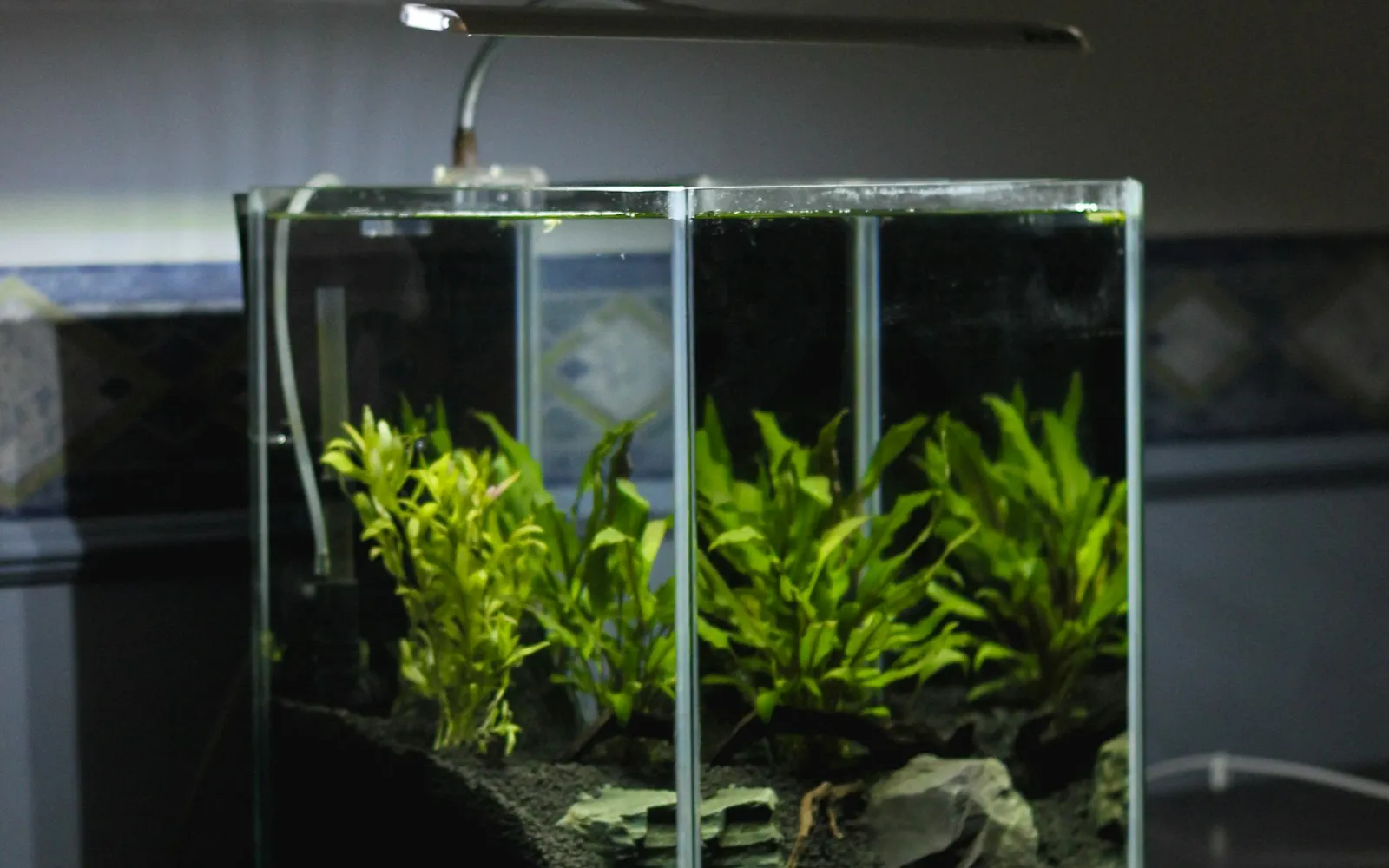
A new aquarium is a blank canvas. It is tempting to fill it with water in the morning and bring fish home the same afternoon, but that shortcut is behind many early fish losses.
This guide shows you how to set up a fish tank the patient way, one step at a time. Follow the order below and your first fish will move into water that is already safe, stable, and ready for them.
Step 1: Choose the Tank Size and Location
Before you set up a fish tank, decide how big it will be and where it will live. These two choices shape everything else, so take your time here.
Why a Bigger Tank Is Easier
It sounds backward, but larger tanks are more forgiving. More water dilutes waste and holds temperature better. The RSPCA advises choosing a tank larger than about 45 x 30 x 30 cm, roughly 10 gallons (40 liters).
Many beginners find a 20-gallon (76-liter) tank a good balance of stability, cost, and space. Avoid bowls and novelty tanks, which lack room for proper filtration.
Picking the Right Spot
Choose a place that is:
- Out of direct sunlight, which overheats water and feeds algae
- Away from radiators, heaters, drafty doors, and air vents
- Near a power outlet, but not where splashes can reach it
- Easy to reach for water changes, with a bucket-friendly floor
- Away from aerosol sprays and smoke, which can harm fish
Do a Weight Check
Water weighs about 8.3 pounds per gallon (1 kg per liter). A filled 20-gallon tank with gravel and decor can easily top 200 pounds (90 kg). Use a stand made for aquariums on a level floor, never a bookshelf or wobbly table.
Step 2: Gather Your Equipment
Before you start, have everything ready:
- Tank and lid to reduce evaporation and stop jumpers
- Filter rated for your tank's volume
- Heater and thermometer for tropical fish
- Substrate such as aquarium sand or smooth gravel
- Water conditioner (dechlorinator)
- Liquid test kit for ammonia, nitrite, nitrate, and pH
- Decor, plants, and hiding spots that are aquarium-safe
- Gravel vacuum, bucket, and net used only for the tank
Tip: buy a lid and light that fit your tank exactly. Many small fish can jump through tiny gaps.
[Internal Link Suggestion: choosing your first species → best fish for beginners easy species to keep at home]
Step 3: Rinse Substrate and Decorations
Store-bought gravel and sand are often dusty. Rinse them in a clean bucket with plain water, stirring until the water runs mostly clear. Never use soap or household cleaners.
Rinse decorations the same way. Add the substrate first, sloping it slightly higher at the back, then place rocks, wood, and plants.
Adding Live Plants
Easy plants such as java fern, anubias, and hardy stem plants help use up waste and give fish cover. Tie java fern and anubias to rock or wood rather than burying their thick stems (rhizomes), which can rot in the substrate.
Planting before you add water is easiest. Mist the leaves with a spray bottle to keep them damp while you work.
Step 4: Fill the Tank and Start the Equipment
Now you can add water and bring the system to life:
- Place a clean plate or bag on the substrate and pour water onto it to avoid a crater.
- Fill with tap water and add water conditioner at the dose on the label.
- Install the filter and heater, but do not plug the heater in for about 15–30 minutes so it can adjust to the water temperature.
- Plug in the equipment, using a drip loop in each cord so water cannot run down into the socket.
- Set the heater to your target, typically around 75–78°F (24–26°C) for common tropical fish.
Step 5: Cycle the Tank Without Fish
This is the step most people skip, and it matters most. Your filter needs a colony of beneficial bacteria that turn toxic ammonia into nitrite and then into less harmful nitrate.
In a fishless cycle, you add a small ammonia source, such as pure bottled ammonia or a little fish food, and let the bacteria grow. The Merck Veterinary Manual describes dosing ammonia to about 1–5 mg/L and testing until both ammonia and nitrite fall to zero.
Cycling typically takes several weeks. The RSPCA says at least two weeks, and Merck notes a tropical biofilter can take up to 8 weeks.
During cycling, keep the heater and filter running around the clock. The bacteria need warmth, oxygen, and a steady food supply.
Step 6: Test Before You Stock
Your tank is ready when it can process ammonia to zero within about 24 hours, with nitrite also at zero and nitrate showing up. Test for several days in a row to confirm.
Do a large partial water change before adding fish to bring nitrate down, remembering to use conditioner in the new water.
[Internal Link Suggestion: weekly water testing and maintenance → freshwater fish care guide for first-time owners]
Step 7: Stock Slowly
Even a fully cycled tank needs time to adjust to living fish. Add a small group first, then wait a few weeks, checking ammonia and nitrite, before the next group.
Research each species before you buy. UF/IFAS Extension stresses learning about a fish's needs, adult size, and tankmates first, and quarantining new animals before they join an established aquarium.
Step 8: Acclimate Your First Fish
How you add fish matters as much as when. Follow these steps:
- Turn the aquarium light off to reduce stress.
- Float the sealed bag in the tank for about 30 minutes so temperatures match.
- Gently net the fish into the tank and throw away the store water.
- Keep the light off for the rest of the day and feed lightly the next day.
Rule of thumb: patience at setup saves you money, stress, and fish later on.
How Long Does It Take to Set Up a Fish Tank?
The hands-on work usually fits into an afternoon. The waiting is what takes time. A realistic timeline to set up a fish tank looks like this:
- Day 1: place the stand, rinse, aquascape, fill, and start the equipment
- Weeks 1 to 8: fishless cycling, with tests every few days
- Following weeks: add fish in small groups, a few weeks apart
Plan your fish shopping around this schedule, not the other way around. Buying fish before the tank is ready is how many beginners end up rushing.
When to Get Expert Help
Even when you set up a fish tank carefully, problems can happen. Ask an experienced aquarium store, local aquarium society, or an aquatic or exotic-animal veterinarian for help if:
- Ammonia or nitrite readings stay high after many weeks of cycling
- New fish gasp at the surface, clamp their fins, or stop eating
- White spots, fuzzy growths, or sores appear
- Several fish die soon after being added
Take a water sample and your test log with you. It helps experts find the cause quickly.
Final Thoughts
When you set up a fish tank step by step, you give your fish the best possible start. Choose a solid spot, gather the right gear, cycle without fish, and stock slowly. For more help, visit our fish care guides.
[Internal Link Suggestion: setup errors to steer clear of → common fish tank mistakes new owners should avoid]