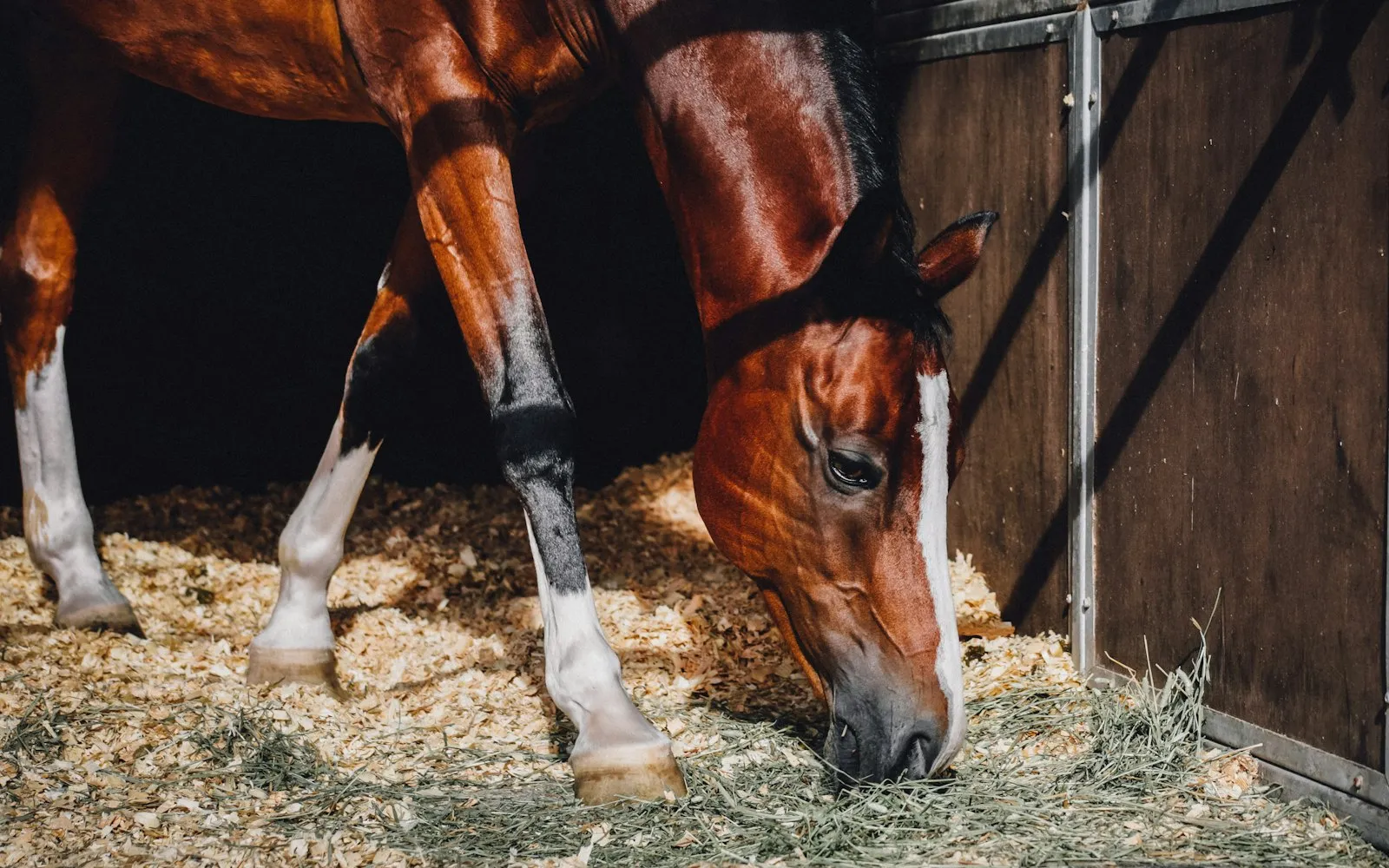
Horses are grazing animals with a digestive system built for eating fiber little and often. When we feed them the way nature intended, they tend to stay healthier, calmer, and easier to manage.
This beginner guide to horse feeding explains how much forage to give, why water and salt matter, when concentrates are useful, and how to change a diet safely. You will also learn how to judge body condition and which plants to keep away from your horse.
Forage First
Hay and pasture should form the base of every diet. Good horse feeding always starts here, not with the grain bin.
The University of Minnesota Extension advises feeding most mature horses 1.5–2.5% of their body weight in forage daily, and never less than 1%. For a 1,000-pound (454 kg) horse, that is about 15–25 pounds (7–11 kg) of forage per day.
If you only remember one horse feeding rule, make it this: feed plenty of good-quality forage, spread through the day.
Choosing Hay
Look for hay that smells sweet, is leafy, and is free of mold, dust, and weeds. Grass hays suit many adult horses. Legume hay, such as alfalfa, is richer and may be used in smaller amounts or for horses with higher needs.
Signs of Poor Hay
- Musty smell or visible mold
- Heavy dust when you shake a flake
- Lots of weeds, sticks, or trash
- Hot or damp bales
Moldy or dusty hay can harm the lungs and gut. When in doubt, throw it out. Buying from one reliable supplier and testing your hay for nutrients can take a lot of guesswork out of horse feeding.
Water and Salt
Water is the most important nutrient in horse feeding, even though it does not come in a bag. Many 1,000-pound horses drink about 10–12 gallons (38–45 liters) a day, and a working horse in summer heat can drink 12–16 gallons (45–61 liters) or more.
Low water intake is linked to impaction colic, especially in winter. Keep water clean, fresh, and ice-free at all times.
Horses also need salt. Provide free-choice salt, such as a plain salt block or loose salt, so your horse can take what it needs. Horses that sweat heavily may need extra electrolytes, so ask your vet.
When Concentrates Are Needed
Many adult horses in light work can maintain weight on good forage, salt, and water, often with a vitamin and mineral supplement or a ration balancer to fill gaps in the hay. Concentrates, such as grain or commercial feed, are useful for horses that need more energy.
- Horses in hard work or competition
- Growing young horses
- Pregnant or nursing mares
- Some seniors and hard keepers that lose weight easily
Feed concentrates in small meals. The University of Minnesota Extension recommends not feeding mature horses more than about 0.3–0.4% of body weight in cereal grains per meal. For a 1,000-pound horse, that is about 3–4 pounds (1.4–1.8 kg) at a time.
[Internal Link Suggestion: fitting meals into your routine → how to care for a horse daily]
Weigh Feed, Don't Scoop It
Feed labels and diet plans use weight, not volume. A scoop of one feed can weigh much more or less than a scoop of another, and hay flakes vary a lot in size.
- Buy an inexpensive hanging or kitchen scale.
- Weigh one full scoop of each feed you use.
- Weigh several hay flakes to learn the average.
- Write the amounts on a feed chart in the barn.
Rule of thumb: weigh everything once, write it down, and weigh again whenever you change hay or feed.
Accurate horse feeding depends on knowing your horse's weight, too. A weight tape gives a useful estimate between vet visits.
Change Feeds Gradually
A horse's gut microbes need time to adjust. Sudden changes raise the risk of colic and laminitis, which is why slow transitions are a core horse feeding habit.
The University of Minnesota Extension suggests replacing only 20–25% of the current feed every other day, so the full switch takes about a week or longer. This applies to new hay, new grain, and moving onto spring pasture.
Body Condition Scoring
Body condition scoring helps you see whether your horse feeding plan is working. The common scale runs from 1 (very thin) to 9 (extremely fat), and a score of about 4–6 is ideal for most horses.
Check the ribs, neck, withers, shoulder, back, and tailhead. You should be able to feel the ribs easily but not see them clearly.
Score your horse every month or two and adjust gradually. Ask your vet to score your horse with you the first time.
Special Cases
Not every horse fits the standard plan. These groups need extra thought, a tailored horse feeding plan, and a vet's input.
Senior Horses
Older horses may have worn or missing teeth. If your senior drops feed or loses weight, they may do better on soaked hay cubes, chopped forage, or a complete senior feed. Regular dental care matters more with age.
Easy Keepers
Some horses gain weight on very little food. For them, horse feeding focuses on controlled amounts of lower-calorie hay, limited lush grass, and regular exercise, rather than simply cutting forage too low.
Laminitis-Prone Horses
UC Davis notes that laminitis is commonly linked to endocrine conditions such as equine metabolic syndrome (EMS) and PPID, as well as grain overload and sugar-rich pasture. At-risk horses often need restricted grazing, a low-sugar diet, and a plan made with their vet.
[Internal Link Suggestion: early signs of laminitis and colic → common horse health problems and warning signs]
Toxic Plants to Watch For
Safe horse feeding also means checking what grows in and around your pasture. Common dangers include:
- Red maple: wilted or dried leaves can destroy red blood cells
- Japanese yew: even small amounts can be fatal
- Oleander: affects the heart and can cause death
- Black walnut: shavings used as bedding can trigger laminitis
- Oak: acorns and young leaves can cause digestive upset
Never feed lawn clippings or garden trimmings. Walk your fence lines each season and remove anything suspicious.
Common Horse Feeding Mistakes
- Feeding large grain meals and too little hay
- Guessing amounts by scoop or flake
- Switching feeds overnight
- Letting water freeze or go dirty
- Adding several supplements without a plan
- Ignoring slow weight gain or loss
Most of these errors are easy to fix once you know them. Keep a simple feed chart on the barn wall so anyone who helps with chores feeds the same amounts at the same times.
When to See a Vet
Call your vet or an equine nutritionist before making big changes to your horse's diet, especially for seniors, easy keepers, or horses with medical conditions.
Call right away if your horse stops eating, shows colic signs, has feed coming from the nose, becomes suddenly lame, or may have eaten a toxic plant.
Final Thoughts
Good horse feeding is mostly about simple habits: forage first, fresh water, free-choice salt, weighed meals, and slow changes. Keep an eye on body condition and adjust with your vet's help. For more guidance, browse our horse care guides.
[Internal Link Suggestion: the other pillars of care → horse care basics every new owner should know]